
Ranter

Join devRant
Do all the things like
++ or -- rants, post your own rants, comment on others' rants and build your customized dev avatar
Sign Up
Pipeless API

From the creators of devRant, Pipeless lets you power real-time personalized recommendations and activity feeds using a simple API
Learn More
Comments
-
@AndSoWeCode Okay, you're basically right.
But in my experience, fresh graduates consider themselves to be the best developers in the world. "Experienced" developers with a degree unfortunately also.
The company I am currently working for as a freelancer doesn't even ask for a school degree. Instead, there is a probationary period. If he's got it, he'll be hired. If he's not, he'll be fired.
In my opinion, schools teach far too much bullshit anyway, which is probably never needed in real life - especially universities. -
 CWins47428yEspecially big companies get a lot of candidates and "by degree" is a simple and statistically useful filter.
 -
@tracktraps if I could kill to get a time machine and urge myself to get into engineering and learn programming, I would (in a completely hypothetical way of course...). The first 3 years would be hell learning stuff I hate and don't care about, but the last years I would have been learning a lot of cs. I would have had the opportunity to learn AI in a strict academic environment. I would have had the opportunity to learn with the best computer scientists of my country. I don't regret choosing History as a career, considering that at that time I didn't know shit about programming and I loved history. But if I could get back in time, I would choose to get into a cs degree while trying to get freelance jobs in parallel.
-
 rfc716827768yI agree with you on a CS degree not guarantying hiring good developers. It's also not universities' job to give someone a proper job training.
Of course you might get morons with a degree but no technical skill and experience whatsoever when "just hiring someone with a CS degree".
(German has a wonderful word for that: "Fachidiot")
But, if such people pass your technical interview, it's in some way also your fault as a company.
However, in my experience people with CS degree mostly have already a lot of experience through either being interested in various kinds of technology and doing side projects in their free time or working in a dev-job to finance their studies or both and more.
Also, having a degree in CS shows a certain commitment to your field of interest - it's not that easy and it can really suck sometimes - and that you're able to learn some very theoretical things or programming languages (e.g. for assignments) pretty fast. -
@nin0x03 Ditto. You can have a CS degree and suck or be wonderful. You can lack a CS degree and suck or be wonderful. It's an independent variable as a relation to skill.
Now as for dedication to your field, it shows you will give up 4 years of your life so I guess it might correlate with being serious or a good employee. I don't know.
I know my cs professor once said, "anyone can program. You can teach a monkey to program. It's solving the problems that actually matters." Which I think he's correct. Most of programming is trivial "make this input accept characters but not get a SQL injection" type stuff but as far as genuinely interesting learning, CS is where it's at.
All that said, I'm in a leadership role though and if I need a programmer (with no formal background, no crazy math), I would take the best programmer with or without a degree. A data scientist or something more formal, I'm looking for advanced math and that's one thing a CS or engineering degree holder would have -
rfc716827768y@codePatrol I agree.
Also, regarding hiring a Data scientist, I'd like to add that one doesn't get exposed (that much) to other sciences and/or actual research anywhere but at university.
As far as I know, only the bigger companies are able to actually do the "R" in the R&D department. Having someone with a degree who knows how to work scientifically if need be can really be an improvement in a smaller company. -
@nin0x03 Yeah, that was where I started out was at a big multinational manufacturer doing r&d. It's cool and weird to do nothing more than write papers for a living. Everyone in that department had a degree in CS or engineering as far as I know. But that company was a major manufacturer so engineering and a scientific background are important.


Related Rants

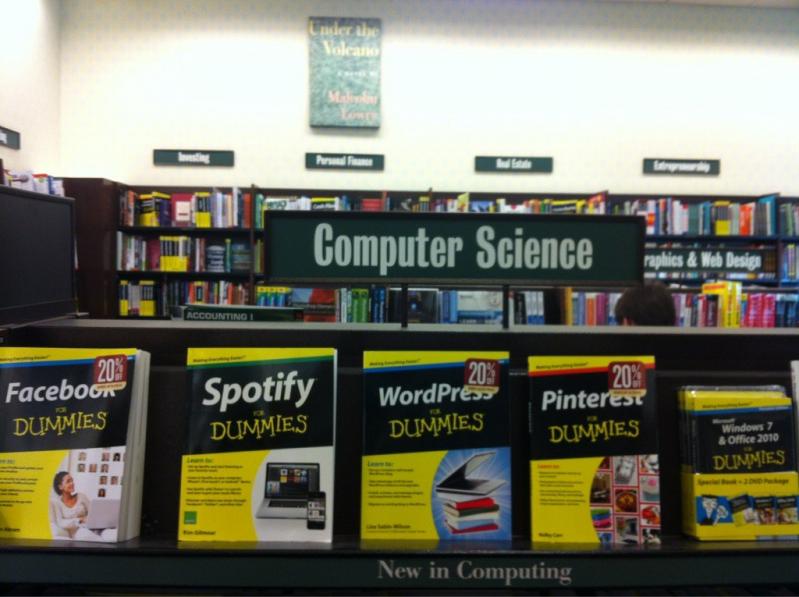 This is just sad
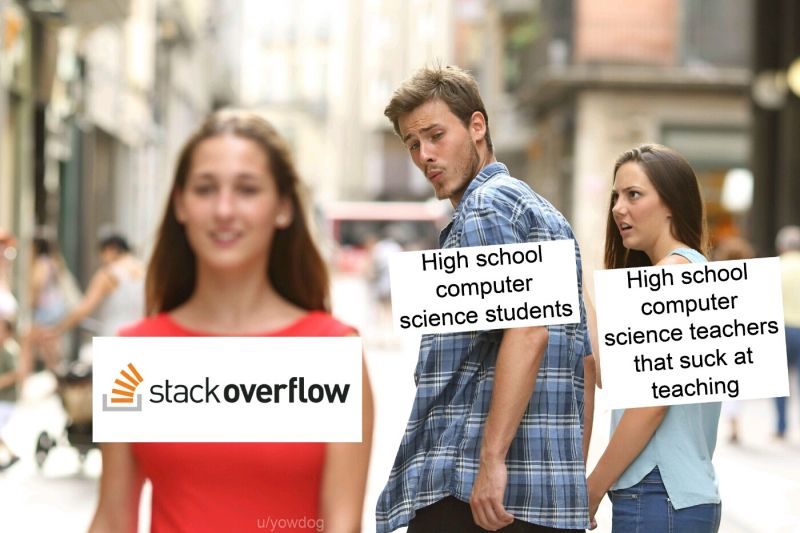 They hate to see it.
 !Rant
I GRADUATED FROM COLLEGE TODAY WITH MY DEGREE IN COMPUTER SCIENCE!
Now to find a job :D
!Rant
I GRADUATED FROM COLLEGE TODAY WITH MY DEGREE IN COMPUTER SCIENCE!
Now to find a job :D
Why in 2017 it's still so important for companies that their candidates have a motherfucking CS degree?
Most people I know with a CS degree are less skilled and knowledgable as I am in technology, and they tell me that all you learn in CS degree is a lot of irrelavant math and a lot of theory, with some rare places actually teaching you relevant courses.
What's more prefarable to a company, someone with a diverse tech experience or someone with a CS degree?
rant
degree matters?
computer science