Join devRant
Do all the things like
++ or -- rants, post your own rants, comment on others' rants and build your customized dev avatar
Sign Up
Pipeless API
From the creators of devRant, Pipeless lets you power real-time personalized recommendations and activity feeds using a simple API
Learn More
-
Funny how on Facebook (which I left years ago) I used to never get any likes for anything I wrote, even if it was meaningful.
Then I would look at the feeds of my friends and they would get ++'s for mainly useless and uninspired pop-culture reposts or posts of high narcissim.
It's ironic how they praised garbage rather than value.
I'm glad that on Devrant I at least get ++'s, indicating that people can relate to me. On Facebook, people faux-relate based on narcissim and faux-culture.
Shrug.12 -
When I started off working on this particular project under a new technical manager, I used to love working overtime because the work and the problem we were trying to solve was really interesting. My technical lead was also a really awesome dude and I was able to learn a lot of things under his guidance. A couple of times, I didn't even mind working on the weekends too in case we wanted to meet some strict deadlines. I wanted to make sure that my team's brand name does not get spoiled and we deliver on what we promise.
It was all good until all the management started taking our overtime and weekend work for granted. It took me some time to realize this. Now it almost became a part of standard expectations. It was getting irritating. Managers could see this uneasiness but chose to do nothing.
The work increased, so did the team and the communication channels. The newbies in the team now worked overtime and on weekends. And everybody started acting as if it was normal. That's when it stuck me that I am responsible for inculcating this unsustainable and life sucking culture in the team. I stopped working overtime and started questioning the set deadlines, often asking them to postpone things. Management got furious and changed their focus on the newbies who'd work overtime, often rewarding them to reinforce the behavior.
I tried undoing it, asking managers that the team will not work on weekends. There was friction and managers would agree but the old bad habited cultural spore would pop up tume and again and the team would go back to the regular overtime and working weekends thing. As more time passed, the managers would circumvent me and start talking to others in the team, giving them work and deadlines directly because I started to say 'No' when I felt the need to do so. I tried to protect some folks in the team who would not be able to speak up but were frustrated. I started caring less about the team's brand and more about colleagues who were suffering due to such unethical (and illegal?) practices being normalised in the team.
Trying again and again to get back to 'normal', I failed everytime. Unsure of how far I'll be able to go on with this without getting severly burnt in the process and seeing no respite, I decided to move on. I put in my resignation two weeks back and want to start a fresh in another company.
I feel I am responsible for bringing this into the team without realizing the repurcussions of my working overtime. Staying in the team for more than 3.5 years, I could actually feel how managers have no fucks about your personal life and work life balance (despite showing oh so much concern about the well being of my family) and would reward anyone who works as per their whims and fancies. I wish I never get to work for a management such as this.2 -
So I just recently found out there's a local idol group named MNL48 in here.
Basically bringing the seiyuu/J-Pop culture in the Philippines.
...
Maybe I should've became an idol instead of a senior high school programmer :/3 -
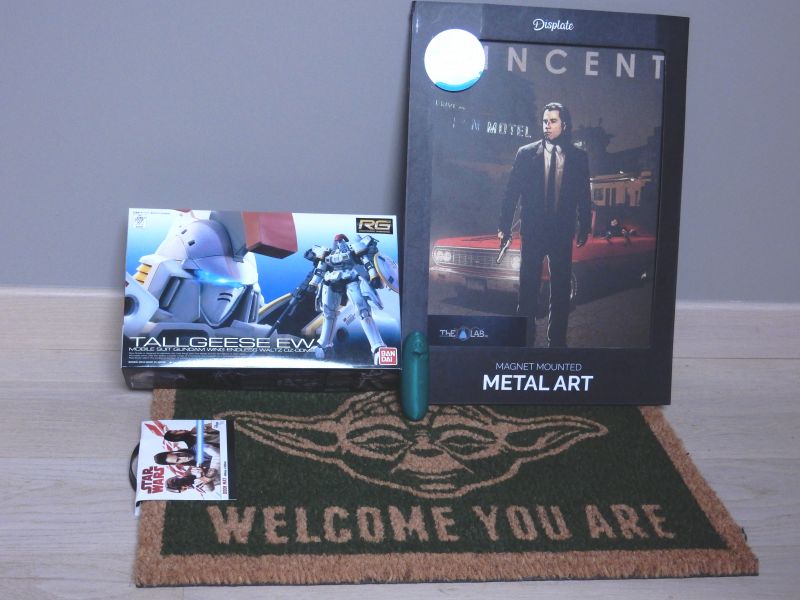
My kick-ass merch from JapanCon Brussels (Nov 2018): a Yoda doormat, TallGeese Gundam Wing model, Pulp fiction displate, AND in front of it A 3D-PRINTED PICKLE RICK OMG CAN YOU BELIEVE THAT!!! xD
 2
2 -
I'm making the communication in my company. So I have to make facebook posts to link our product.
That could be fun if only I could use memes, jokes and pop culture references. Unfortunately, our targets are seniors. So, always same format, always same sentences, always same images. I'm bored.2 -
This is sort of a boring story. I always have been interested in making games but actual coding always made me very uncomfortable and never tried it until I got to college. I met some really cool guys there and got into an association that was based on pop culture and videogames. Me and the president of that association started on our spare time to code for a videogame. He made his and I made mine. The software I used was gamemaker studio and I made like 7 games. I wanted to make a website for the games so I learned HTML, CSS and JavaScript. At that first year I was studying criminal justice and was slowly being taken away by programming. I changed my concentration to computer information system thinking that I wanted to do a more general approach but programming kept gaining ground. I had depresion on middle School all through highschool and early college. I'm safe to say that after I decided to code seriously my depression has seize to exist and life feels very good. Coding for me is very rewarding and challenging. I'm soon going to pursue a bachelor degree in computer science and hope I don't change concentration again.2
-
The titles - some of these events have the most insufferable titles. If it's not some cringey pop-culture acronym like AVNGRS then it's a super nondescript, mysterious title like "The Bakeoff", which helps nobody and doesnt do the event justice.
I would much prefer "MIT Anual CTF, 2021" than the usual bullshit fanfare referencing the Matrix.1 -
I think it really depends on the person attending (why they want to be a developer, how they learn, their ability to apply what they learn etc) I think these bootcamps serve a good purpose by making helping people achieve their goals. I will say that pop culture has set some pretty unrealistic standards for what it is like being a developer, and a lot of the bootcamps are propagating that misconception
-
Right now my brain tries to devour both 80s and 90s pop culture, digest them and turn them into succinct and potent… pods? Capsules with info?
The problem is that those two cultures are incompatible in my head, yet both mean a lot to me. I’m a big aesthetics geek.
It feels like when Alec Steele tried to forge tungsten. It doesn’t work. But I lost control over my thoughts, so I’m kinda bad-tripping/daydreaming without drugs as my brain drags my mind through this tunnel where words have no meaning and walls are made of broken glass and spent syringe needles.
Let it end, but also make it never end, as I’ll lose myself should I be robbed of those weird experiences. Sometimes you want your food spicy, your transmission manual, your bike fixed gear, and your sex bdsm. Just don’t strangle or drown me while playing with me, my dear brain. We need each other to survive. -
The Timeless Appeal of Leather Clothing
Leather clothing has long been associated with style, durability, and a touch of rebellion. From the rugged appeal of leather clothing to the sophisticated charm of leather skirts and trousers, this material continues to be a staple in fashion. Over the decades, leather has evolved from being a purely functional material to a high-fashion statement, embraced by designers and consumers alike.
A Brief History of Leather Clothing:
Leather garments have been worn for centuries, dating back to ancient civilizations where leather was used for protection against harsh weather conditions. In the early 20th century, leather jackets became iconic among aviators and military personnel due to their resilience and warmth. By the 1950s, Hollywood rebels like Marlon Brando and James Dean made leather synonymous with youth rebellion, cementing its status in pop culture. Today, leather remains a symbol of edginess, luxury, and versatility.
Types of Leather Used in Clothing:
There are several types of leather used in the fashion industry, each offering unique characteristics:
Full-Grain Leather: The highest quality, known for its durability and natural appearance.
Top-Grain Leather: Slightly processed for a smoother finish while retaining strength.
Genuine Leather: More affordable and often used in budget-friendly fashion.
Faux Leather: A synthetic alternative that mimics real leather while being more sustainable and cruelty-free.
Popular Leather Clothing Items
Leather can be fashioned into a variety of garments, each exuding its own appeal:
Leather Jackets: A timeless piece that suits both casual and formal styles.
Leather Pants and Skirts: Offering a bold and sleek look for various occasions.
Leather Dresses: A chic choice for those who love a unique yet elegant appearance.
Leather Boots and Accessories: From gloves to belts, leather extends beyond clothing into stylish accessories.
Sustainability and Ethical Considerations
With growing concerns about environmental impact and animal welfare, the fashion industry is increasingly turning to sustainable leather alternatives. Vegan leather, made from materials like pineapple leaves and recycled plastics, offers a cruelty-free option while maintaining the aesthetic appeal of real leather.
Conclusion:
Leather clothing remains a classic choice that transcends trends. Whether opting for traditional leather or sustainable alternatives, this material continues to captivate fashion enthusiasts worldwide. With proper care, leather garments can last for years, making them a worthwhile addition to any wardrobe. 3
3


Top Tags
Weekly Rant
View